

Review of The Mad Wife by Meagan Church
Spoiler Alert
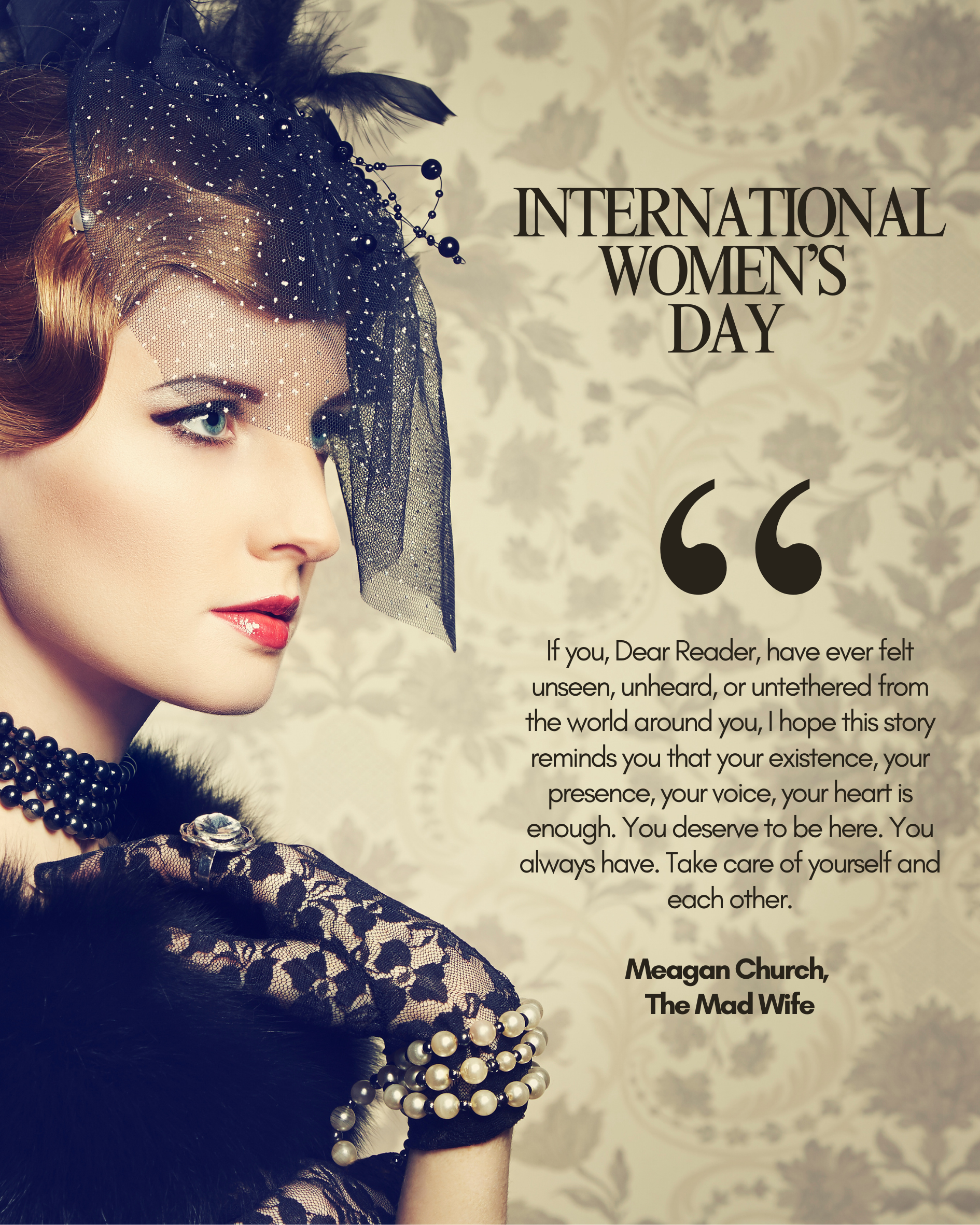
I was walking into Trader Joe’s yesterday and was surprised to see on their board that it was International Women’s Day. A Google search revealed it is a celebration honoring the social, economic, cultural, and political achievements of women, while also advocating for gender equality.
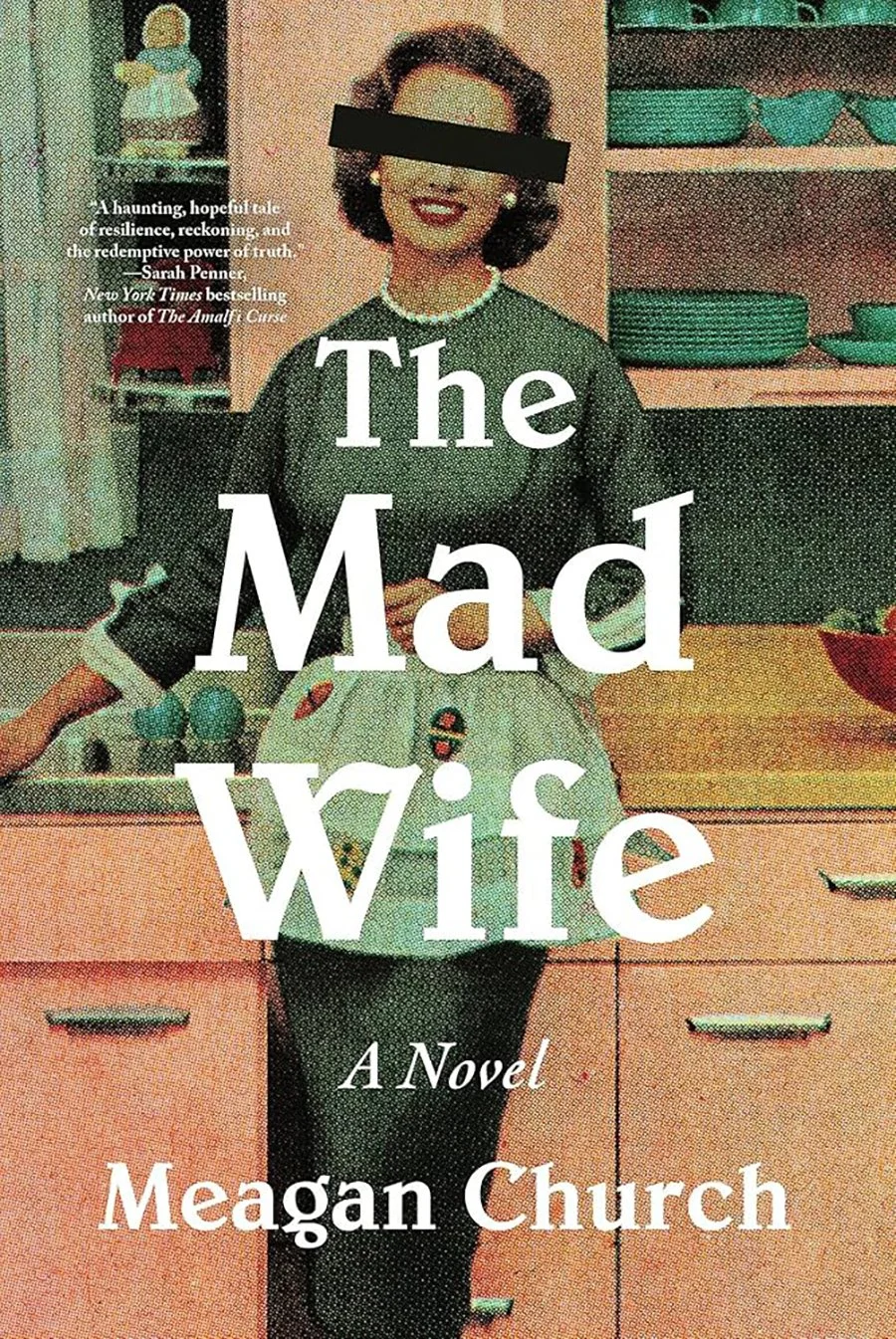
I immediately thought of a book I read recently that reminded me of how far women have come. The Mad Wife, by Meagan Church, is about a housewife in 1950s suburban America whose descent into what was then called “hysteria” reveals the darker side of women’s identity in that era. In the author’s note, Church shares that she was influenced by Sylvia Plath’s novel The Bell Jar, as well as Plath’s own tragic suicide, and even has a side character based loosely on Plath.
On the outside, Lulu Mayfield’s life seems almost idyllic: living in the perfect house on a cul-de-sac in middle America, caring for her children, and playing spades with the other moms while the children nap. She is known among her friends as the queen of the gelatin salad, and even makes one called “The Perfection Salad”. But Lulu is also up against societal expectations that determined women’s main goal in life was to be the perfect housewife, whether they were educated, intelligent, curious, or creative, was irrelevant. Instead, middle-class women of this era were tasked with all child care duties, making nightly wholesome home-cooked meals, throwing dinner parties, keeping a spotless home, and maintaining perfectly coiffed hair. Essentially, a Leave it to Beaver kind of existence.
Viewed through a modern lens, Lulu’s life may have sounded mundane on the surface, but what made it truly awful was that she and her friends had almost no agency beyond deciding on what the family ate for dinner and what to buy with their ubiquitous Green Stamps.
Granted, the 1950s in America was a very different world from our own. Think about it. 1955 was only ten years after the end of World War II, just two decades removed from the Great Depression, and barely three decades after the passage of the Nineteenth Amendment to the United States Constitution in 1920, which granted women the right to vote.
Yes, women technically had the right to vote in the United States by 1955, but they were hardly perceived as equals to men. It is difficult to imagine today, but in many places, women could not obtain their own credit cards or open bank accounts without a husband.
Lulu was no exception. She often deferred to her husband, the capable, ambitious young architect Henry Mayfield, and in some cases, with dire consequences.
After the birth of her second child, Lulu begins to fall apart, unable to achieve the ideal she believes is expected of her. Her house becomes messy, she forgets things, she stops doing her hair, and Henry begins to worry about her capabilities. Instead of talking about how overwhelmed she feels, Lulu bottles up her emotions rather than reveal her distress in order to maintain the veneer of perfection.
When Henry asks her at the last minute to host a dinner party for his boss, she serves TV dinners and flat gelatin salad. That is the final shocking straw. Henry responds by calling the doctor, who immediately prescribes pills to calm her “hysteria.”
But the pills do not work. In fact, they seem to make things worse.
Eventually, it is revealed that something far more tragic has happened: Lulu’s daughter was stillborn. Unable to face the loss, she has dissociated from reality and is pretending the child exists. The truth is that Lulu is grieving and very likely suffering from postpartum depression, something that in the 1950s might have simply been labeled hysteria.
She feels unable to express her grief because she was expected to move on immediately. Maybe it has something to do with the fact that the day after returning from the hospital, her husband went back to work, yet Lulu was expected to resume her duties as if nothing had happened.
As the story progresses, Lulu becomes suspicious about her neighbor, Bitsy, whose vacant stares and emotionless demeanor suggest she may have been given a “new” treatment called a lobotomy to calm her nerves and make her more pliant. Lulu begins to fear that this may be her own fate if she cannot meet society’s expectations.
And she is not wrong.
Henry eventually has Lulu committed to an asylum, where she is subjected to electric shock therapy in hopes that it will help her “remember the truth” and, perhaps more importantly, return to being the perfect housewife. The injustice of Henry making this decision for her, and Lulu having no choice but to comply, is deeply unsettling.
Lulu’s terrifying plight stayed with me long after finishing the book. Although it is fiction, I was astonished. How could something like this have happened to a woman in the United States?
It made me pause and acknowledge how far we have come. Most married women today are not at the mercy of their husbands’ decisions. Couples often share household and childcare responsibilities. Women have maternity leave, careers if they choose them, and in many households, they even earn more than their husbands. They frequently play a central role in decisions about spending, saving, and investing family resources.
Women have come a long way since Lulu and Bitsy’s 1950s cul-de-sac. Ask most women today, and they would likely say that women and men are equal in the United States.
But we still have a way to go to make it fully true.
Women in the United States still earn roughly 83 cents for every dollar earned by men. According to the U.S. Bureau of Labor Statistics, “Women who were full-time wage and salary workers had median weekly earnings of $1,005 in 2023. That was 83.6 percent of the $1,202 median for men.”
And while progress has been made in many areas, women still shoulder more unpaid labor at home. Researchers analyzing time-use data estimate that women spend about two more hours per day on household and caregiving work than men, responsibilities that continue to influence career opportunities and lifetime earnings.
International Women’s Day reminded me that the distance between Lulu’s world and our own is vast but not complete. Stories like The Mad Wife are unsettling precisely because they remind us how recent that history really is. The freedoms many women enjoy today were not inevitable; they were hard-won. And if we want the next generation of women to inherit a world where equality is not just aspirational but real, then remembering where we came from may be just as important as celebrating how far we’ve come.